The Phomemo P12 Label Maker Machine review comes down to one useful distinction: this compact printer supports both everyday thermal labels and thermal transfer materials for jobs that call for a different label type.
Its phone app, broad design tools, and two power options make it worth considering for household, classroom, and light office organization.
Phomemo P12 Review Summary
The quick verdict
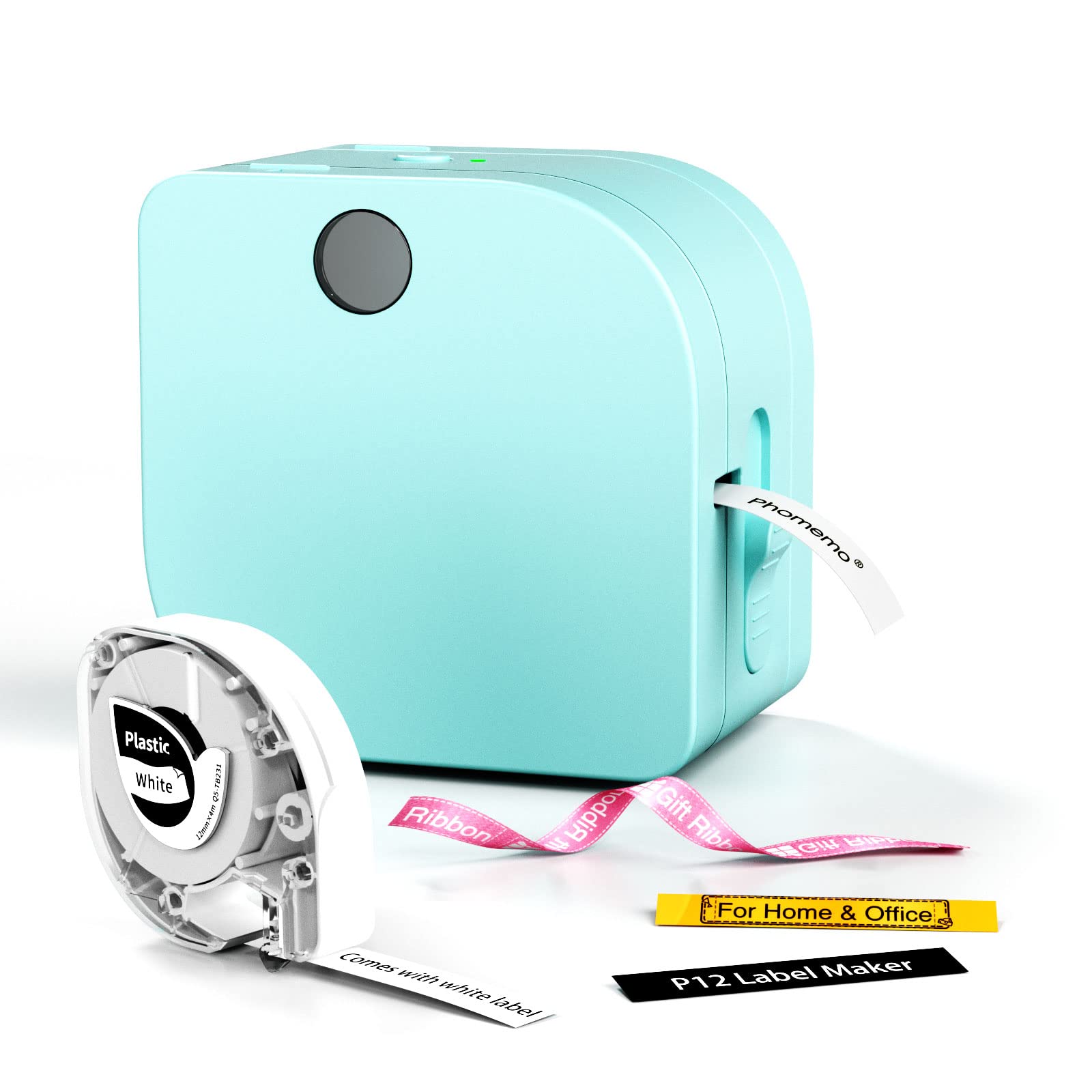
2,000+ ratings
Read Amazon ReviewsPhomemo P12 Label Maker
A compact phone-controlled label maker for home organizers, teachers, and crafters who want both everyday labels and more durable transfer options.
- Bluetooth connection to iOS and Android phones through the companion app.
- Supports both thermal labels and thermal transfer labels, including options such as thermal paper labels, ribbons, and iron-on labels.
- 203 DPI resolution and inkless printing, with no ink, toner, or ribbon required for thermal labels.
- App tools include text, barcode creation, Excel import, scanning, OCR, and voice recognition.

Pros
- Supports two label approaches, broadening its usefulness across routine and more demanding labeling tasks.
- Extensive app design tools give users plenty of ways to personalize labels and create barcodes or other content.
Consider before buying
- The six AAA batteries needed for battery-powered use are not included.
- Label creation relies on a Bluetooth phone and companion app, so it may not fit a workflow centered on computer-based printing.
Read the full review summary
The P12 is designed for people who want to make labels from a phone and choose from more than one kind of label stock.
Standard thermal labels suit routine organizing, while the thermal transfer option is positioned for labels exposed to conditions such as bathrooms, dishwashers, outdoor settings, or clothing care.
That versatility could help households and classrooms handle varied labeling tasks with one compact machine.
Its app-based workflow adds tools for text, barcodes, Excel imports, scanning, OCR, and voice recognition, alongside a large selection of languages, fonts, borders, and symbols.
USB-C power supports extended use near an outlet, while six AAA batteries offer portability. Buyers should confirm which label materials fit their projects and account for the batteries being sold separately.
The buying factors
Phomemo P12 Scorecard
Editorial scores reflect listed features and buyer fit; they are not laboratory measurements or customer ratings.
Label material flexibility
Supports thermal labels and thermal transfer materials, giving it scope for both everyday organization and more specialized labeling.
App design options
The app offers more than 15 languages, 90 fonts, and 1,000 borders and symbols, plus several ways to create or import content.
Everyday versatility
The described uses span household storage, school supplies, office documents, price tags, and crafts.
Power flexibility
USB-C operation and optional AAA battery use cover desk-based and portable situations, though batteries are not included.
Setup convenience
Bluetooth phone control and a built-in cutter simplify the described workflow, but label creation depends on a compatible phone and app.
Value potential
Inkless printing and multiple supported label types may reduce the need for separate labeling tools, depending on material and refill costs.
Key Features and Specifications of Phomemo P12
- Bluetooth connection to iOS and Android phones through the companion app.
- Supports both thermal labels and thermal transfer labels, including options such as thermal paper labels, ribbons, and iron-on labels.
- 203 DPI resolution and inkless printing, with no ink, toner, or ribbon required for thermal labels.
- App tools include text, barcode creation, Excel import, scanning, OCR, and voice recognition.
- More than 15 languages, 90 fonts, and 1,000 borders and symbols are available for label design.
- A built-in cutter and continuous printing support label-making workflows.
- Can run from the included USB-C cable or six AAA batteries, which are not included.
Pros and Cons of Phomemo P12
Pros
- Supports two label approaches, broadening its usefulness across routine and more demanding labeling tasks.
- Extensive app design tools give users plenty of ways to personalize labels and create barcodes or other content.
- Works for a wide mix of home, classroom, office, and craft projects.
- USB-C and AAA battery options give buyers a choice between plugged-in use and portability.
Consider before buying
- The six AAA batteries needed for battery-powered use are not included.
- Label creation relies on a Bluetooth phone and companion app, so it may not fit a workflow centered on computer-based printing.
- Buyers need to choose suitable label material for each job; the different thermal and transfer options serve different purposes.
Who Should Buy Phomemo P12?
Good fit
Consider the Phomemo P12 if you expect to label a broad range of items and value having both everyday thermal labels and transfer materials available.
The combination could suit a home that labels pantry containers, storage, cosmetics, or school supplies while also making occasional clothing or craft labels.
It also makes sense for teachers, office users, and small-scale organizers who want flexible designs from a phone.
The app’s barcode, Excel import, OCR, and voice features may be useful when labels need to be produced from existing information rather than typed from scratch.
For frequent work at a desk, USB-C power avoids relying on disposable batteries. If you plan to take the machine away from an outlet, include the cost and convenience of six AAA batteries in your decision.
Who should skip it
Look elsewhere if your routine depends on printing from a computer or requires a large-format shipping label workflow; the described setup centers on Bluetooth phone use and smaller organizational labels.
It may be more capability than needed if you only make occasional basic labels and have no use for transfer materials or the app’s broader design tools.
In that case, compare simpler phone label makers and the cost of their compatible refills.
How the Phomemo P12 Fits Everyday Labeling
Two label types expand the use cases
The P12’s most distinctive feature is support for thermal labels as well as thermal transfer materials.
That gives buyers options: routine thermal labels for household organization, and transfer-oriented choices for uses such as clothing care, bathrooms, or outdoor labeling.
Check the specific material’s application instructions and suitability for the surface or conditions you have in mind before printing a full batch.
A capable phone-based design workflow
The app combines familiar text and symbol design with barcode creation, Excel import, scanning, OCR, and voice recognition.
This mix can help when labels need repeated fields or when source information is already available in a spreadsheet or image.
The tradeoff is that the workflow depends on a compatible phone, Bluetooth, and the app; buyers who prefer desktop editing should confirm their preferred setup before choosing.
Power choices favor flexible placement
USB-C power is practical for a regular work spot, while six AAA batteries can make the P12 easier to carry to a classroom, storage area, or craft table.
The battery route requires a separate purchase, and the product description does not specify runtime, so heavy users should consider whether they will usually print near an outlet.
Match label stock to the job
Waterproof, oil-proof, wear-resistant, and residue-free removal are described for the label options, but performance can depend on the material and application.
A good buying approach is to identify the labels you will make most often, then check that the corresponding refill type and size are available and appropriate for those surfaces.
Alternatives to Phomemo P12
Battery-focused alternative
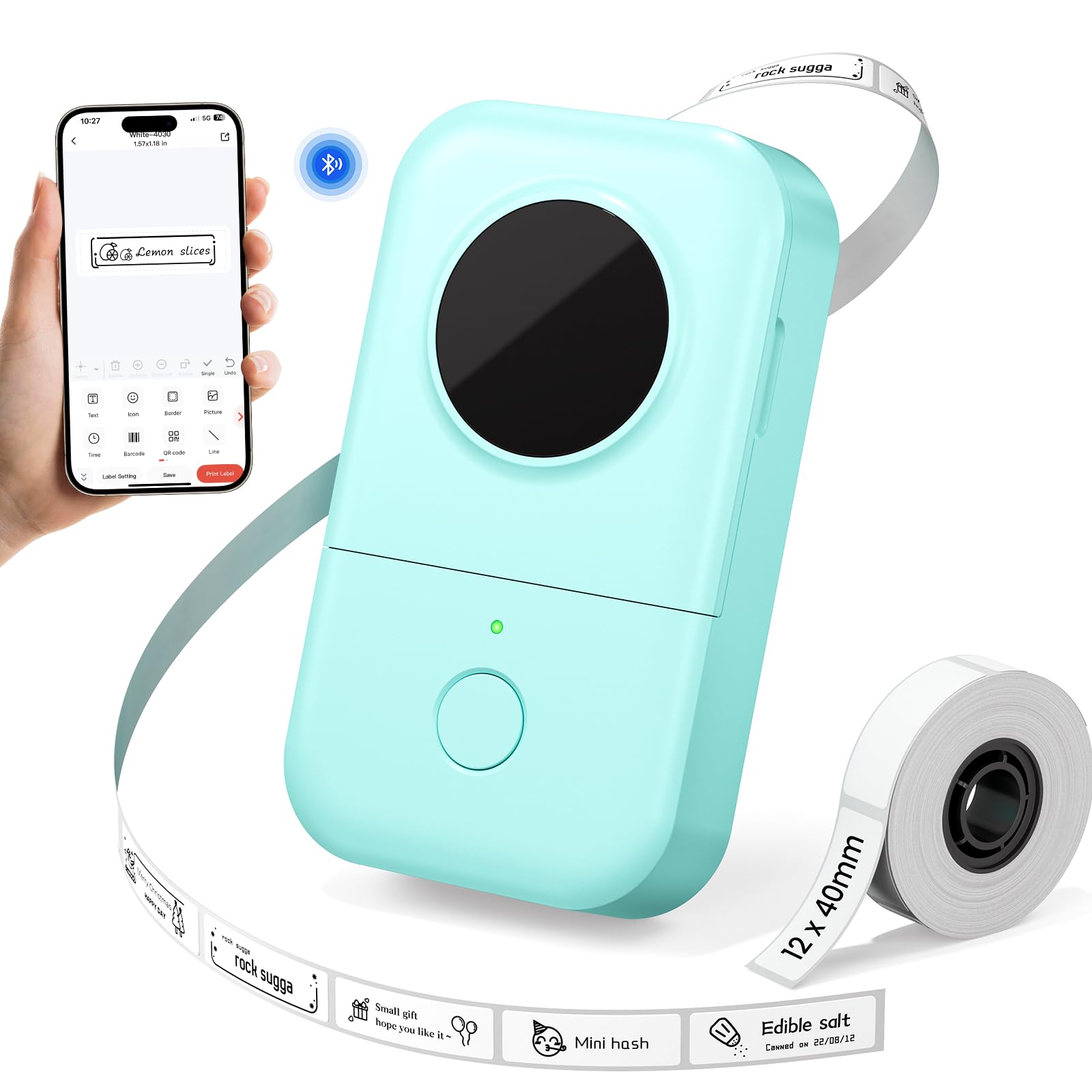
1,000+ ratings
Read Amazon ReviewsPhomemo D30 Label Maker
Choose the D30 if rechargeable portability and its listed tape widths suit your routine. The P12 is the more relevant fit if you specifically want its stated support for thermal transfer materials alongside standard thermal labels.
- The D30 is described as a 203 DPI thermal label maker with a rechargeable battery, multiple tape widths, and app tools including QR codes, barcodes, images, and templates.
- The P12 supports both thermal labels and thermal transfer materials, with app features that include Excel import, OCR, and voice recognition.
Desktop Label Printers alternative
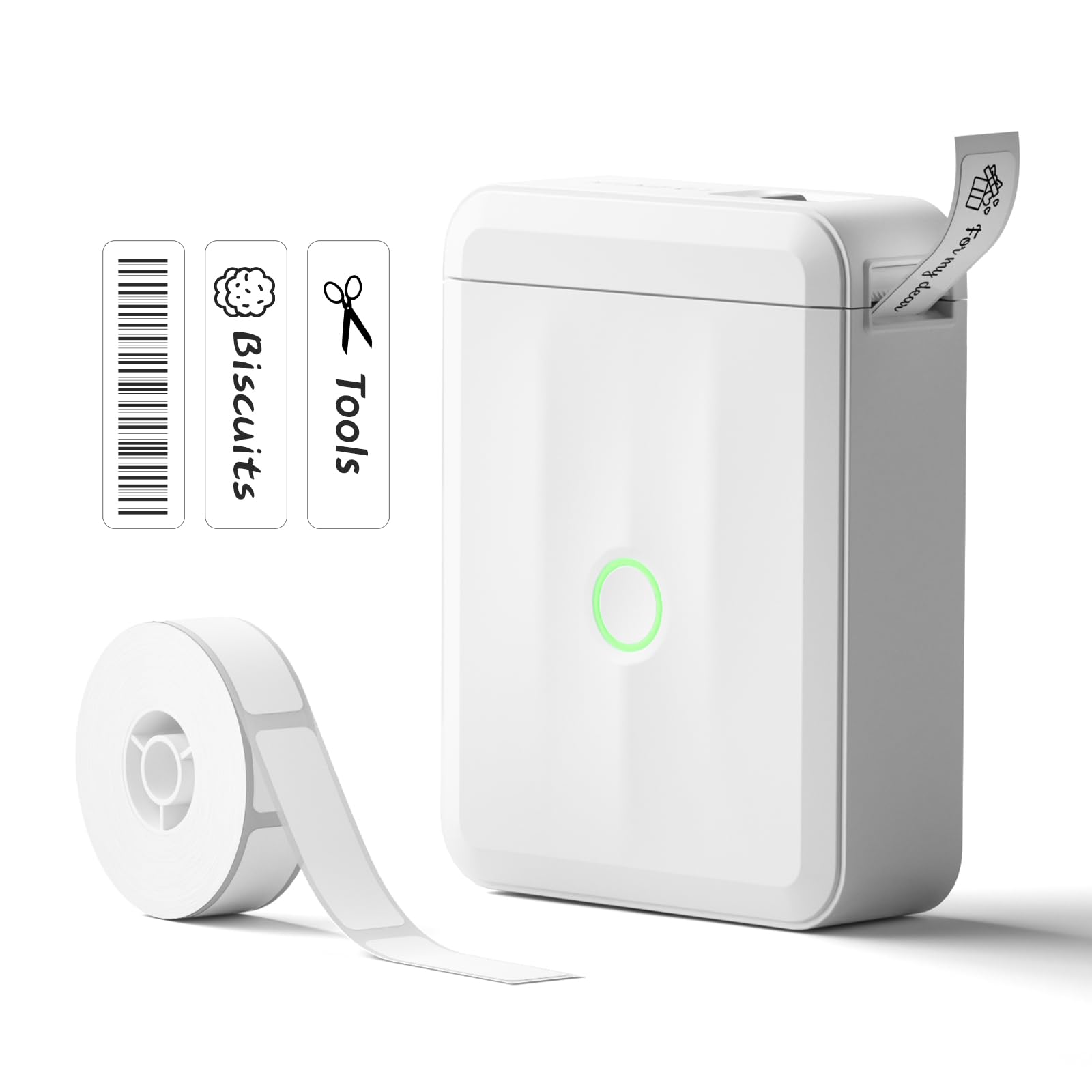
14,000+ ratings
Read Amazon ReviewsNIIMBOT D110 Label Maker
The D110 may suit buyers who want a rechargeable device for straightforward thermal labeling and prefer its listed label variety. Consider the P12 if transfer materials and its broader described app functions are more useful to your projects.
- The D110 is a rechargeable, phone-connected direct thermal label maker with 203 DPI printing and options that include clear, colorful, and round labels.
- The P12 offers both thermal and thermal transfer label options and supports USB-C or six AAA batteries.
Is Phomemo P12 Worth It?
The Phomemo P12 Label Maker is worth considering for people who want a flexible phone-based organizer with a wider choice of label materials.
Its app tools, built-in cutter, and USB-C or battery power give it a broad role across home, school, office, and craft tasks.
Before buying, match the refill types to the labels you actually need and decide whether Bluetooth phone control fits your workflow.
The P12 is strongest when its material flexibility will see regular use; for occasional basic labels, a simpler device may be enough.
Your review at a glance
2,000+ ratings
Read Amazon ReviewsPhomemo P12 Label Maker
A compact phone-controlled label maker for home organizers, teachers, and crafters who want both everyday labels and more durable transfer options.
- Bluetooth connection to iOS and Android phones through the companion app.
- Supports both thermal labels and thermal transfer labels, including options such as thermal paper labels, ribbons, and iron-on labels.
- 203 DPI resolution and inkless printing, with no ink, toner, or ribbon required for thermal labels.
- App tools include text, barcode creation, Excel import, scanning, OCR, and voice recognition.